


Waste: Can biomass-to-energy conversion gain ground?
Posted 8 months ago by Admin Myktex 1 in Sustainability
According to the Sustainable Energy Development Authority, the installed capacity of biomass FiT plants in progress is 25.9mw in 2025 (data taken at September 2025), which comes after small hydro and biogas from landfill and agricultural waste.
In March last year, Nestlé Malaysia announced that it had started operating a biomass boiler in its Chembong factory in Negeri Sembilan, which relies on empty fruit bunches (EFB) and palm kernel shells (PKS) from oil palm plantations as its biomass feedstock.
This replaces the use of fossil fuels such as diesel or natural gas to power the boiler, which generate steam for heating in its manufacturing process. According to the company, this is projected to reduce its greenhouse gas (GHG) emissions by 14,000 tonnes of CO2e annually.
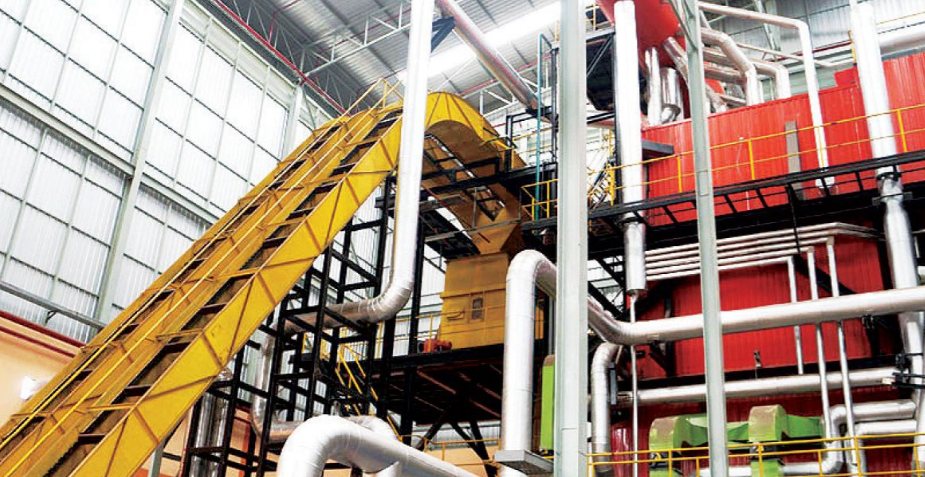
Enco started by servicing boilers, which is used by factories that need heat and electricity. About 17 years ago, it began building and operating its own boilers, servicing clients in Thailand, Indonesia and Singapore as well. The boilers are suited to the type of agriculture waste commonly found in the region, such as from oil palm, timber and rubber.
According to Enco managing director Allen Ng, Enco was the first to build a biomass boiler to generate steam in Malaysia, and the company is unique because it also owns and operates the boilers to sell steam and electricity to clients.
“I would say that we are a bit too early … But it’s a good thing as well, since we went through a lot of things. In 1993, our first biomass boiler was installed in Straits Timber Products. That wasn’t fully automated yet, you still had to manually throw in the fuel and remove the ashes. In the early 2000s, we improved our systems to make it semi-automatic,” says Ryan Ng, general manager of Enco.
According to the company, it signed and commissioned Malaysia’s first biomass-steam supply agreement with Marigold Industrial (M) Sdn Bhd in 2003, and a year later, built the first oil palm biomass-fired power plant connected to grid in Southeast Asia for TSH Resources Bhd in Tawau, Sabah.
Biomass boilers are able to take in other kinds of agriculture waste as well, such as wood and garden waste. It just has to be collected, dried and ground to a smaller size, so it can be fed into the boiler.
“To generate 1mw of energy, you need around four tonnes of steam, and for that, you need around two tonnes of EFB, which is quite easily sourced in Malaysia,” says Allen.
Availability of biomass waste a problem
The potential for oil palm waste to be turned into energy via biomass boilers is huge in Malaysia, thanks to the abundance of plantations. There are challenges, however, to making this more commonplace.
One is the distance of factories from plantations. The cost of transporting the waste might be too high, if the factories are located in urban areas. Secondly, the factories must have enough space to fit the biomass boiler.
Thirdly, the availability of feedstock is a major problem and worry for many companies.
“This is one of the biggest problems. At the end of the day, we always end up either having to operate for them or guaranteeing them the source of fuel,” says Cheong Chee Yun, head of finance and corporate affairs at Enco.
The other fuel sources are even more challenging to collect. Paddy is only harvested twice a year, whereas garden waste from municipals are not collected in a central area. Allen observes that many timber mills are also closing down, resulting in less feedstock from this sector.
To address this bottleneck, Cheong calls for government intervention in the collection and treatment of agriculture waste. There should also be prioritisation of biomass-to-energy, if the goal is to produce more renewable energy in Malaysia.
There is plenty of competition for oil palm waste like EFB and PKS, such as to turn into fertiliser, animal feed and biofuel. Some biomass is also exported to other countries to generate energy.
“If you have enough fuel, your biomass activities can actually generate 24 hours of constant energy, whereas with solar, you basically only have four good hours of energy generation and at night, you have to use batteries. In terms of adaptability and viability, it is most suitable. The other alternative is hydropower but it has environmental issues [due to the land-use change],” says Cheong.
“The shortfall for the biomass industry is the availability of fuel.”
Big oil palm plantation companies are aware of the value of biomass waste, and are already turning it into useful resources, he adds.
“But small millers are not as engaged with the agenda. We need the government to get these people together and drive it, otherwise we will not be able to collectively get all the biomass waste that we have, which is a lot.”
Another solution is for the government to introduce regulations that mandate collection of agriculture waste like EFBs, which would emit methane — a potent greenhouse gas emission — if left to rot.
Ng suggests that Malaysia take a cue from Thailand, where provincial governments take an active part in the collection of agriculture waste.
Cheong suggests that data centres — which consume large amounts of energy — could use biomass boilers as a source of renewable energy. The hurdle, once again, is the limited availability of suitable fuel.
“Normally, the maximum you can generate is up to 10mw. Usually, data centres require 50mw to 100mw. If there’s no regulations [to mandate collection of agriculture waste], it’s a problem. Data centres also need huge amounts of water for cooling. If they use a biomass boiler, we can generate power and support air conditioner condensing [simultaneously],” says Cheong.
“The government could own an energy-processing unit where it gathers all these biomass waste, then we can supply it to all the data centres to generate electricity.”
Still little contribution from biomass
The financial incentives are already there by the government to encourage biomass-to-energy, for instance, through the Feed-in-Tariff (FiT) policy. FiT allows successful bidders to sell electricity produced from biomass to the grid at a favourable price.
According to the Sustainable Energy Development Authority, the installed capacity of biomass FiT plants in progress is 25.9mw in 2025 (data taken at September 2025), which comes after small hydro and biogas from landfill and argiculture waste.
Data for operational plants under the FiT scheme for biomass is not available on the website.
According to the Energy Commission Malaysia’s database, 226 ktoe of biomass contributed to the primary energy supply by fuel type in 2022, coming after solar at 294 ktoe and before biogas at 134 ktoe.
The FiT rate for biomass (from Sept 30, 2024), is RM0.38 kWh up to and including 30mw, with bonus given to generators that use gasification technology, locally manufactured or assembled boiler or gasifiers, and use of steam-based electricity generating systems with overall efficiency above 20%. The rate is higher than that of biogas, small hydro and solar.
Enco has participated in the FiT scheme before. The financial incentive is helpful, but due to the capex to install biomass steam boilers and concerns about the accessibility of biomass feedstock, as well as low awareness about this technology, there is still plenty of room to grow.
“To promote this, we cannot do it alone. We can only do our small part and own a few plants. That’s our capacity,” says Cheong.
“Allen has spent the past 20 years developing boiler designs to suit the environment in Malaysia and cater for palm, timber and other agriculture waste. We have also done it for cocoa plantations. On that front, we have the capability to play the role [to help companies achieve their circular economy goals].”
(Source: The Edge Malaysia)