


Southeast Asia’s largest BESS, a gateway for Sabah’s energy transition
Posted 6 months ago by Admin Myktex 2 in Sustainability
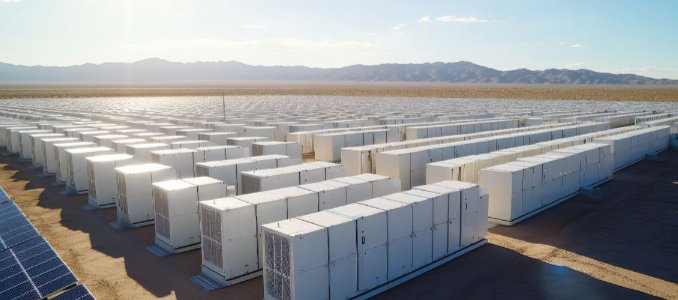
In the region’s energy transition journey, Sabah has recently put Malaysia’s name on the map with the commissioning of Southeast Asia’s largest grid-scale energy project.
In the region’s energy transition journey, Sabah has recently put Malaysia’s name on the map with the commissioning of Southeast Asia’s largest grid-scale energy project.
More than proving Malaysia’s grid readiness by bringing a new technology into the country, few realise the significance of the battery energy storage system (BESS) project in advancing Sabah’s energy roadmap — a key component to entice more investments into the resource-rich state.
The infrastructure, developed by Sabah Electricity Sdn Bhd’s (SESB) subsidiary Elopura Power Sdn Bhd, opens doors to all kinds of transformational efforts. It reduces reliance on emissions-heavy diesel, allows renewable energy (RE) projects to be rolled out efficiently, and even paves the way for Sabah’s emissions tracking and management in this age of environmental sustainability. At 100MW, the BESS is the largest such facility in Malaysia today, cementing its position in the Malaysia Book of Records.
“It’s not just another project. The battery is an enabler — a horses-for-courses solution — and it interlocks our long-term ambitions and is part of the solution. The link will generate momentum in renewable energy generation and the total energy capacity as a whole for Sabah,” says Sabah Electricity chairman Saadiah Aziz.
The project is one of many by Sabah Electricity, the single-largest power producer in Sabah and the sole operator of the state’s over 3,100km of transmission lines as well as its distribution network.
Every project from here on out “is part of a chain reaction” as it tackles Sabah Electricity’s multiple responsibilities, says Saadiah, ensuring Sabah’s grid can meet demand, while reducing its carbon footprint, and making sure Sabah’s electricity sector is financially independent in the coming years.
“The project’s on-time delivery demonstrates Sabah Electricity’s readiness and technical competence to execute fast-track energy infrastructure aligned with the Sabah Energy Roadmap and the National Energy Transition Roadmap goals,” Saadiah says.
The bridge between crisis and transition
Unlike other regions, Sabah requires faster adoption of RE. Instead of just supporting carbon goals in the long term, RE is seen as a necessity in the short to medium term to improve energy supply reliability for its over 720,000 electricity customers.
The requirement for RE can be traced back to the nature of Sabah’s power grid. With an area spanning more than 73,000 sq km, Sabah makes up more than half the size of Peninsular Malaysia, with mountainous terrain that makes it challenging to roll out state-wide grid and pipeline infrastructure.
This barrier to access has resulted in Sabah relying on the more expensive diesel supply for its power supply, while the state provides one of the cheapest residential electricity tariffs in the Asean region — one that has not been reviewed for over a decade.
With the rising population, electrification and investor demand, the current energy mix is fast becoming unsustainable and warrants a transition to more effective sources, partly to also help the government reduce the hundreds of millions of ringgit in electricity subsidies.
The reserved margin shows some progress from 12% in 2023 to 14% in 2025 when the regulatory of energy in Sabah was managed by the Energy Commission of Sabah (ECoS) in 2024 and led to many progressive increases in initiatives such as BESS. With the battery system in place, it helps us to manage natural disasters that could impact the operations of our plant.
The challenge became imminent when a devastating landslide hit a major hydro power plant for the state in Pangi. It took more than one year to resolve, and another half a year to fully return its 66MW capacity.
Just last September, torrential rain caused state-wide floods, damaged power stations and transmission lines, and at one point cut power to 230,000 customers in the east coast. Repairs on the power line in Penampang required the technical team to travel hours into rural areas and travel on foot. One Sabah Electricity team member lost his life in the floods.
That outage weighed further on the state’s power sector, as a 100MW power plant was already undergoing an unscheduled shutdown.
“A fast-track was needed,” says Sabah Electricity CEO Mohd Yaakob Jaafar. “That’s the logic behind the battery. The BESS is an immediate stabiliser as we bridge short-term reliability with long-term sustainability.”
The urgency resulted in Sabah Electricity checking multiple boxes when it completed the BESS project. The project was commissioned in record time of less than nine months, including land clearing. It is the first in Sabah, and the largest in both Malaysia and Southeast Asia at the time of writing. Sarawak operates a 60MW facility, while Peninsular Malaysia only completed its bidding exercise for a 100MW project earlier this year.
It is also under this project that Sabah Electricity, a subsidiary of Tenaga Nasional Bhd and the Sabah government, secured its first commercial financing facility — as it moves towards becoming financially independent in time for the federal government to fully hand over Sabah’s power sector regulation and management to the state government by 2030.
“It is a testament of the trust given to Sabah Electricity to deliver grid-critical infrastructure,” says Mohd Yaakob. “This battery shows how Sabah is moving from crisis into transition.”
A more efficient grid management
The Sabah Electricity BESS facility sits within Sabah’s east-most town of Lahad Datu, between Sandakan in the north and Tawau in the south. It is meant to mainly support the East Sabah grid, which has less large-scale power generation capacity compared to West Sabah.
Briefly, the BESS stores surplus electricity generated during off-peak hours. This surplus would then be released to the grid when demand picks up or as contingency during unplanned interruptions, reducing dependency on immediate generation.
Unlike power plugs at home, power plants cannot be turned on or off quickly by the switch. A power plant could adjust its generation capacity, but there could be excess generation that is wasted due to mismatch when demand becomes low.
The battery will store this excess generation and reduce wastage — typically in the morning between 1am and 7am.
Based on the capacity, the BESS could provide up to 100MW of electricity per hour for four consecutive hours. If the power requirement is less at any one time, the infrastructure can provide power for a longer period.
“This would give Sabah a safety buffer when outages occur,” says Elopura Power CEO Qaddafi Abdullah Bajerai, who oversees the asset’s operations.
“The charging and discharging process happens automatically through real-time integration with the grid control centre, ensuring stability across the network,” he says.
The infrastructure is expected to contribute to stabilising the Sabah grid for the next 20 years, according to the agreement between Sabah Electricity and Sabah’s power industry regulator, the ECoS.
It comprises three components: a battery management system (BMS) to monitor the cells; a power conversion system (PCS) that converts between DC for storage and AC for transmission to and from the grid; and an energy management system (EMS) to optimise overall grid integration and charging/discharging operations.
The system is protected by temperature control, a liquid cooling system and fire suppression system to ensure the batteries operate within safe and efficient conditions. The first 50% of capacity came online in June this year, followed by full operations in August.
“It was a real team effort,” says Qaddafi. “The site is located quite a distance from the main port, and moving the components required meticulous planning; we had to work very closely with the port team and local authorities to coordinate every stage.
“We have successfully overcome and synchronised the system with the grid. But with strong collaboration between our engineers, Sabah Electricity and our technology partners, we were able to deliver the projects within the schedule,” he adds.
Paving the way for future projects
As the Lahad Datu BESS project began operation, the Sabah government has maintained its focus by rolling out subsequent projects to improve the power industry’s reliability — a key component in driving public well-being and business confidence in the state.
Similarly, Sabah Electricity is focusing on its own projects to support the state’s energy agenda, says chairman Saadiah. “Overall, the BESS project signifies Sabah’s readiness to move into the next phase of the state’s energy roadmap.”
The expansion spans across power generation and transmission, both of which need to grow hand-in-hand in a cost-effective manner to reduce system interruption without adding to the electricity tariff.
This includes a proposed 50MW large-scale solar (LSS) project in Kota Marudu in the northern region, part of 199MW awarded by Ecos this year. It also has a 94MW gas-fired power plant in Kimanis, part of the 360MW approved by the state government; and the 162MW Oriole run-of-river hydro project along the 120km Padas river, out of more than 500MW of hydro capacity to be added in the state in the long term.
Phase A of the proposed 60km Southern Link transmission line is also under construction, situated between Mengalong, Sipitang in the west coast and Upper Padas located further inland in Tenom. Prime Minister Datuk Seri Anwar Ibrahim during the tabling of Budget 2026 said the federal government will provide RM765 million for the long-awaited transmission line project.
Besides these landmark projects, there are other infrastructure and technology initiatives along the supply chain in the pipeline to further improve grid reliability, according to Mohd Yaakob.
Fast-track contingency measures are in place — including the renting of gas and diesel generators while permanent capacity is being developed — and which will be phased out when the latter comes online.
Downstream, Sabah Electricity is continuing its upgrades of key substations to handle higher voltages and injection points — a key enabler of RE alongside transmission lines and battery storage.
Smart meters — which allow real-time consumption tracking to enable better energy use — will be installed for nearly 6,500 large power consumers and feed-in-tariff holders, before expanding to Kota Kinabalu, Labuan and the rest of the country.
Within Sabah Electricity, the group is working with SAP SE to modernise its database, business intelligence and forecasting capabilities — from billing systems to project management, as well as predictive and preventive maintenance for better efficiency.
Sabah Electricity is also looking into distributed energy resources, including rooftop solar or small hydro with integrated small battery storage. Its corporate social responsibility (CSR) programmes at times revolve around similar initiatives, targeting rural schools and communities to improve electricity access.
A bigger role for Sabah Electricity
Beyond the development of utilities, the economic growth stage where Sabah is right now warrants a more active participation by Sabah Electricity, being the single-largest provider of electricity. This is crucial for other utilities such as internet connectivity, water supply and other socioeconomic activities for the state’s 3.7 million residents.
In the bigger picture, Sabah is experiencing more investments than it has seen in years. More than RM58 billion has been recorded since 2020, exemplifying just how the state is catching up.
“We have to coordinate well, be transparent to our four million Sabahans, and to provide solutions and confidence to our stakeholders,” she says.
The group provides regular updates on the status of the state’s electricity grid, explanations on any interruptions, as well as progress on what is being done to resolve the issues.
Currently, Sabah Electricity sits on the Sabah Energy Council, which is responsible to align Sabah’s energy sector planning with its development priorities, such as balancing gas demand between the power sector and industries in order to ensure the commodity can be channelled to higher-value sectors like specialty chemicals.
“Through this platform, Sabah Electricity can better align infrastructure planning and investments in order to support industrial expansion, rural electrification and RE adoption,” Saadiah explains.
In the bigger picture, Sabah is experiencing more investments than it has seen in years. More than RM58 billion in approved investments have been recorded since 2020, exemplifying just how the state is catching up.
Key projects in the pipeline include the Sipitang Oil and Gas Industrial Park, which will house the billion-ringgit large-scale steel manufacturing plant by Esteel Enterprise, besides a petroleum storage and refining facility and a near-shore floating liquefied natural gas facility.
The state is set for a new phase of development, and state utilities like power, water, gas, logistics and telecommunications must be ready. Within the electricity segment, BESS is just the first of many projects that will serve to facilitate growth. The facility has received industry recognition, winning three awards in the Project Management Awards 2025, for Best Project Manager; Green Initiative Winner; and Best Project of the Year — Excellent Award.
Sabah will “definitely see more BESS and RE projects” moving forward, envisions Saadiah. “Several projects have already been awarded by Ecos, and Sabah Electricity will be actively participating in these initiatives both as a developer and as an offtaker,” she says.
Continued relationship with its stakeholders — including the Sabah government, the federal government, other independent power producers and members of the public — remains essential in helping Sabah Electricity ensure that initiatives from grid upgrades to energy transition projects truly benefit Sabahans, she adds.
As the project came online, Sabah’s reserve margin about doubled to more than 20% and this gives some critical breathing room for Sabah Electricity to plan its next steps, such as retiring its diesel generators and developing more power plants, be it solar, hydro or gas.
“More importantly, we must create the foundation for investments, community development and energy security. We must not lose sight of these goals because we want to be part of the solution.”
(Source: The Edge)